
Adaptable House
Overhead Ladder System
Adaptive Overhead Support for Strength and Mobility
Concept
The Overhead Ladder System provides adjustable grab holds that descend from the ceiling, offering upper-body support for balance, mobility, and daily movement. It gives you the option to engage your upper body for assistance when standing or walking feels difficult, helping you stay active and involved in your home.
Grab holds can be raised, lowered, or retracted into the ceiling — remaining present when needed and invisible when not. This flexibility supports a range of activities, from stretching and strengthening to safe, supported movement through space.
Design Intent
This system integrates strength, support, and accessibility seamlessly into the home. Stable overhead grab points encourage users to rely on their upper body when needed while preserving independence and dignity.
The goal is not only to assist mobility, but to promote strength, posture, and confidence — turning everyday actions into opportunities for engagement.
User Experience
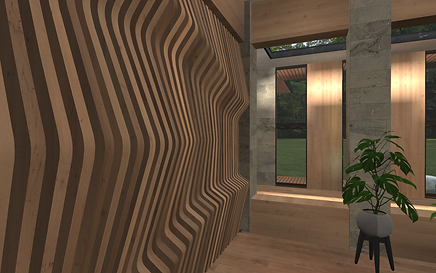
Overhead rungs can descend when you need them, providing dependable upper-body support for balance, rest, or movement. When not in use, the system retracts seamlessly into the ceiling, maintaining open, uncluttered living space.
• Use rungs for stability while standing or walking
• Stretch or strengthen your body, improve posture
• Pause and rest with secure upper-body support
• Retract the system for full ceiling clearance when not needed
Mary’s Reflection
“Some days my legs don’t cooperate, but overhead support lets me move using my upper body instead of relying only on my legs — keeping me mobile, safe, and independent in my home. It keeps my whole body engaged: I can hang, stretch, breathe, reset, or do light strengthening, even assisted pull-ups, staying connected to my own strength. It’s not about pushing harder, but having the freedom to move, rest, and stay active however my body allows.”
Research & Collaboration
The Ladder System was developed through interdisciplinary research at the University of Washington and California State University, Long Beach. Student and faculty teams across Human-Centered Design, Mechanical Engineering, and Mechatronics contributed to its development.
Work to date includes full-scale mechanical design, ergonomic testing, and engineering of retractability and stability—providing a strong foundation for prototyping and real-world integration.
Next Steps
User interface programming, control system engineering, and full-scale prototype fabrication. We are seeking funding, engineering collaboration, and manufacturing partners to refine, build, and implement the ladder system for residential use.
Join Us. Make an Impact.
Your support helps move these responsive systems from concept to lived experience. Opportunities include:
• Donate – fuel innovation and accelerate development
• Collaborate – partner on prototyping, manufacturing, or construction
• Volunteer – contribute your expertise or time to advance the project
Together, we can reimagine everyday supports as tools for strength, balance, and expression — empowering people to move with confidence and individuality.


